Beyond Deep Work: Why the Future of Productivity is Intelligent Orchestration
Deep Work is evolving. I'm no longer the only one doing the doing — I'm orchestrating outputs across multiple tools and agents simultaneously.
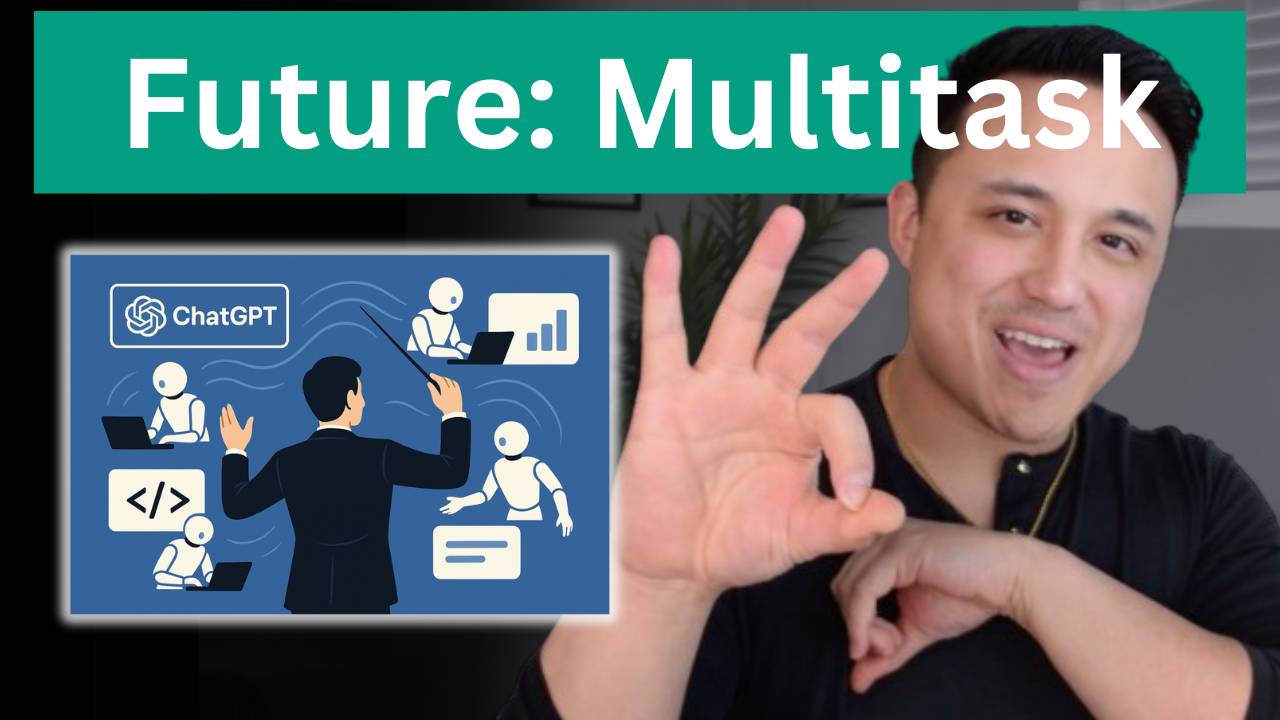
When I wrote the LinkedIn post about “Deep Work” evolving into something new, it wasn’t just a hot take.
It was a reflection of how my own working style has been forced to adapt—especially as I experiment with more AI tools and workflows.
In the past, productivity meant doing one thing well, one thing at a time.
You blocked off hours for focus, fought off distractions, and powered through until the task was done.
That worked—when tasks were linear and human-powered.
But here’s the shift: I’m no longer the only one doing the doing.
I’m orchestrating outputs across multiple tools and agents simultaneously.
That requires more context switching—not less—but it’s high-leverage context switching.
And it’s deeply intentional.
Let me break that down.
What intelligent orchestration looks like
Today, I might:
- Be directing ChatGPT through a multi-step research prompt
- Review progress on a backend being scaffolded by Replit
- Ideate use cases in parallel for a separate product track
Each of these threads runs independently, but I’m still plugged in—guiding each one, offering course corrections, injecting new context.
That’s not traditional multitasking. It’s a shift in how value is created.
The new skill set
I call it “intelligent orchestration” — the ability to:
- Decompose work into parallel streams that AI can handle
- Context-switch efficiently between those streams
- Synthesize outputs into something coherent and valuable
- Know when to go deep vs. when to orchestrate
The old rules of “single-tasking is king” still apply in some contexts. But increasingly, the highest-leverage work is about coordination, not just execution.
What this means for you
If you’re still trying to protect 4-hour deep work blocks but finding them increasingly difficult to maintain — it might not be a discipline problem.
It might be that the nature of knowledge work is shifting.
The question isn’t “how do I focus harder?” anymore.
It’s “how do I orchestrate smarter?”
Check out the original post on LinkedIn
Keep Reading
Why I'm Going All-In on Building Again—And How You Can Too
I've locked back into builder mode. Not just tinkering, but creating something end-to-end. Here's why orchestrating AI tools is becoming a superpower.
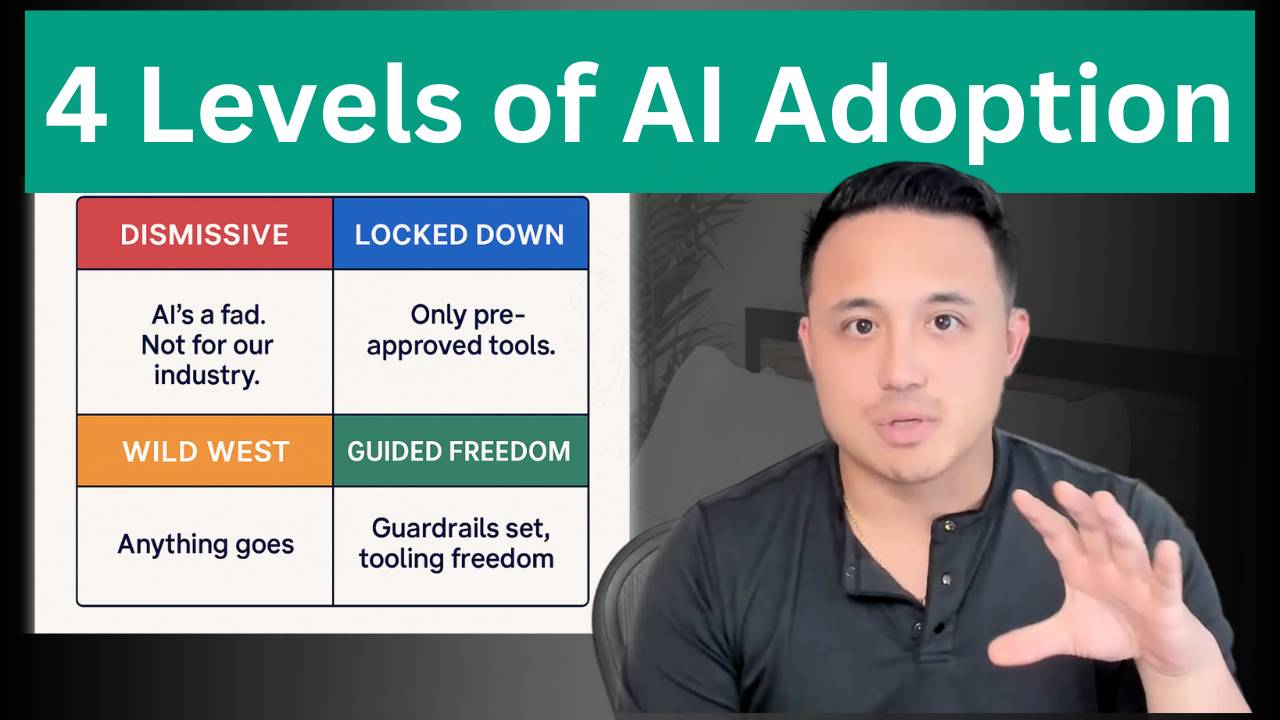
Why the Right Work Environment Matters More Than Ever in the Age of AI
If your workplace doesn't encourage experimentation with AI, odds are you won't get to experiment at all. Here's how to assess your employer's AI adoption level.

The Last 10% Is the Moat
Getting to 90% with AI is table stakes. The separation happens in the last 10%. Here is what to test for when evaluating AI capability on your team.

Working on a problem in manufacturing, AI, or scaling operations?
Let's connect →