American Manufacturing As We Know It Is Collapsing
The manufacturing workforce is aging out faster than we can replace it. Automation isn't optional anymore — it's survival.
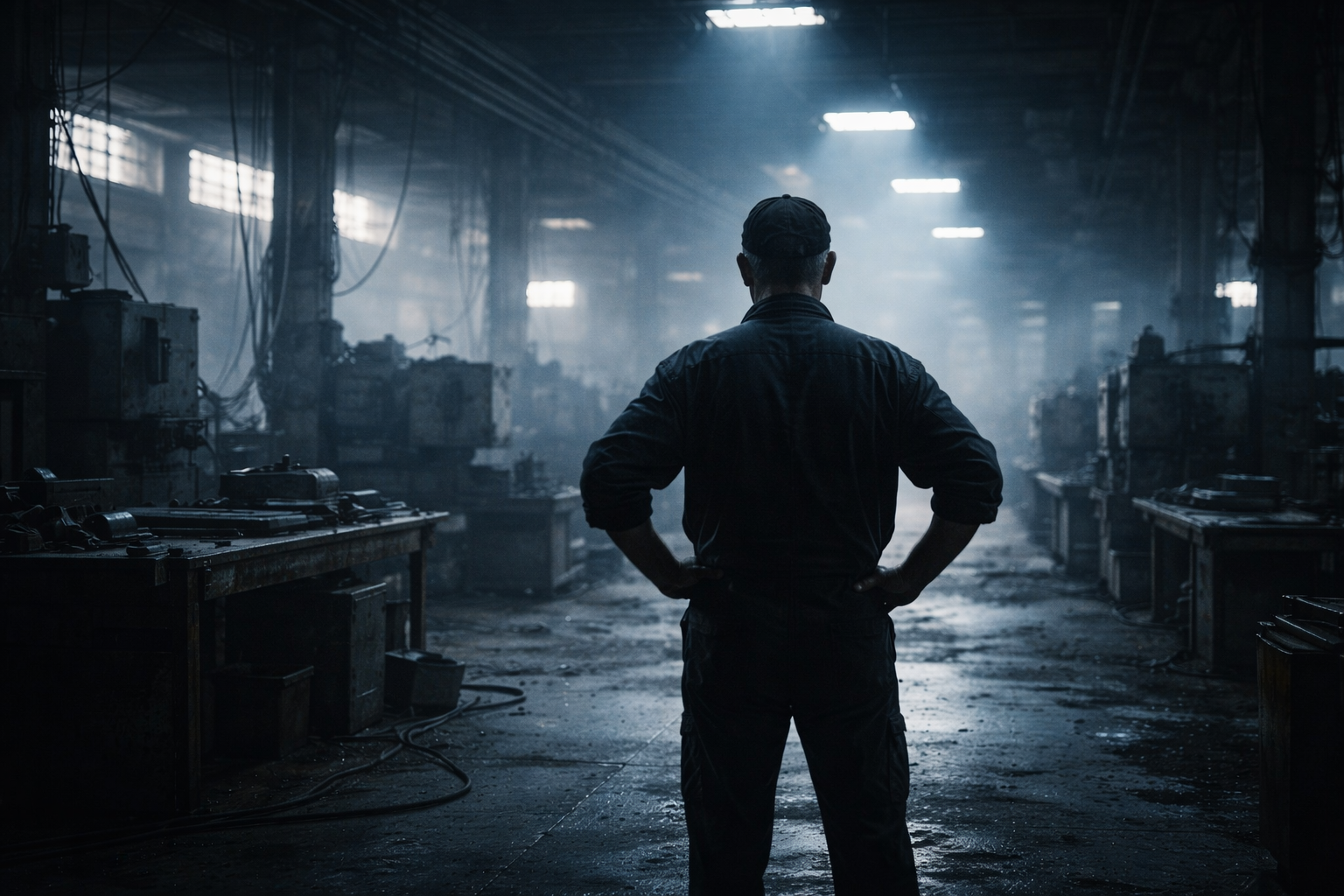
Let me be direct.
American manufacturing as we know it is collapsing.
Not because of offshoring.
Not because of lack of demand.
Because we’re running out of people.
The numbers don’t lie
- The average age of a skilled manufacturing worker is over 50
- By 2030, we’ll have 2.1 million unfilled manufacturing jobs
- Manufacturing employment continues to decline even as output expectations rise
- Young people aren’t entering the trades at anywhere near replacement rates
This isn’t a future problem.
It’s happening right now.
What I’m seeing on the ground
In my conversations with manufacturing leaders across industries, the story is the same:
“We can’t find people.”
“Our best guys are retiring in the next 3-5 years.”
“We’re turning down work because we don’t have the capacity.”
These aren’t small shops.
These are companies doing hundreds of millions in revenue.
The labor bottleneck is real, and it’s getting worse.
Why this matters beyond manufacturing
Manufacturing isn’t just factories.
It’s national security.
It’s supply chain resilience.
It’s economic opportunity for communities.
It’s innovation and R&D capability.
When we lose manufacturing capacity, we lose a lot more than production.
The path forward
This is why I’m so passionate about what we’re building at GrayMatter Robotics.
Here’s the honest truth — automation isn’t about replacing workers.
It’s about:
- Extending capacity when you can’t hire enough people
- Preserving knowledge before it walks out the door
- Creating better jobs that don’t destroy bodies
- Keeping production domestic when offshoring isn’t an option
The factories that figure this out will thrive.
The ones that don’t?
They won’t be around to try again.
A call to action
If you’re in manufacturing leadership:
- Stop waiting for the “perfect” automation solution
- Start piloting now, even if it’s small
- Build internal capability to deploy and scale
- Think about workforce transition, not just technology
The clock is ticking.
Keep Reading
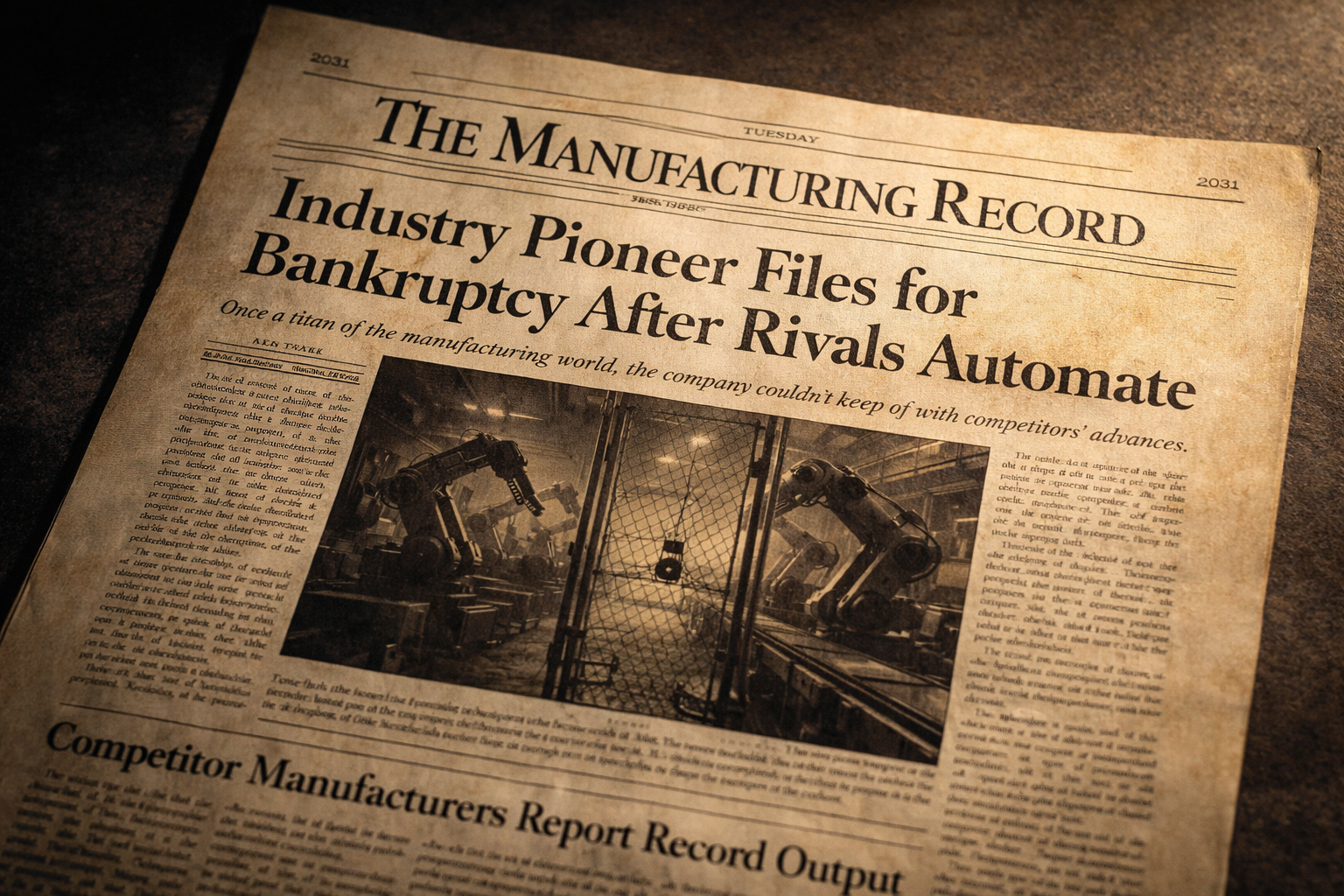
The Next 50 Years of Manufacturing Starts Now
The inflection point is here. The evidence is at every major expo. The question is whether you'll lead from the front — or become the Blockbuster of your industry.
If This Is Not On Your 2026 Roadmap, You Are Already Behind
2025 made one thing painfully clear for manufacturing leaders. This is no longer about experimenting with automation. It is about survival.
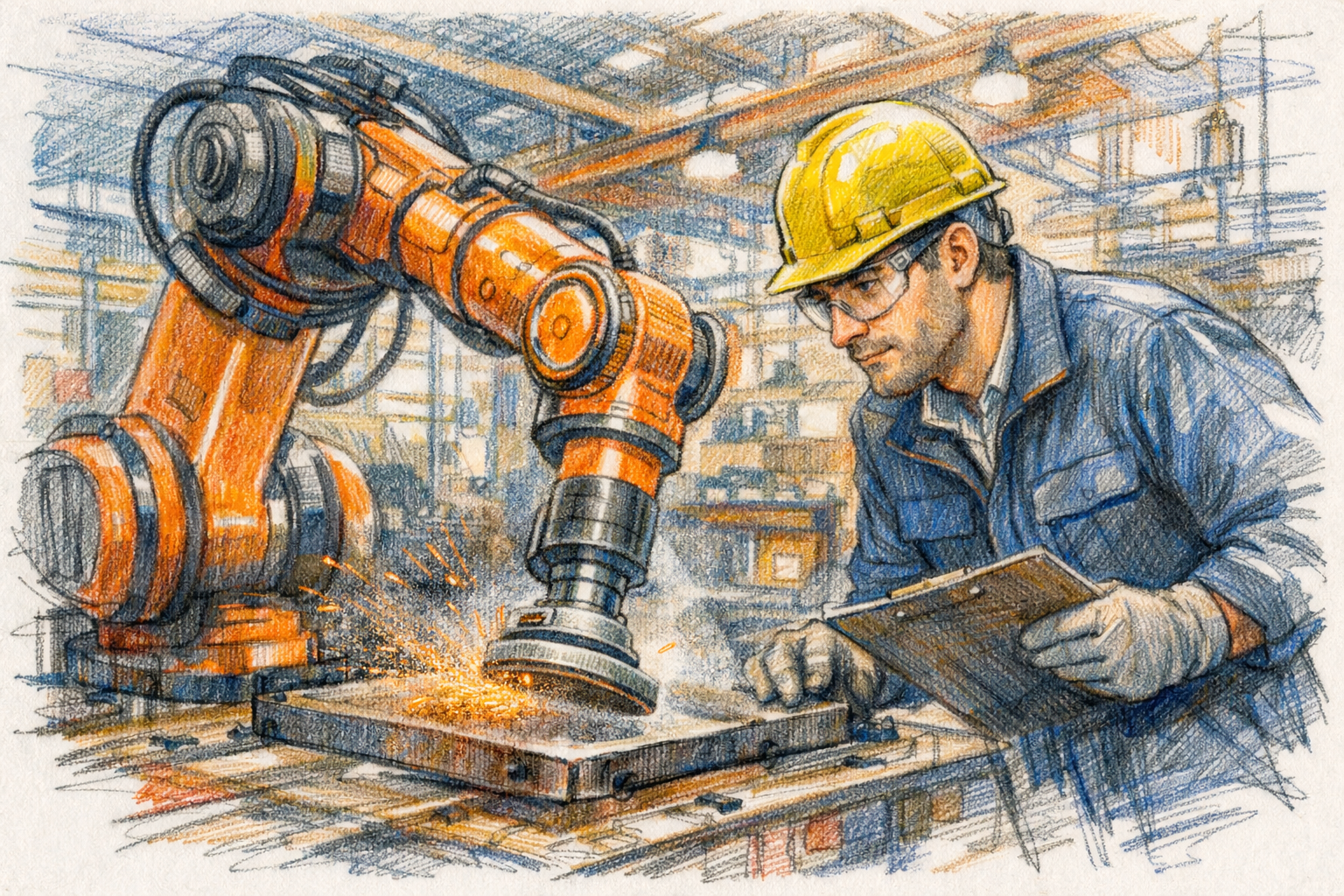
Future-Proof Your Factory With Robots
The factories that will thrive in the next decade are the ones investing in adaptive automation today. Here's what that actually looks like.

Working on a problem in manufacturing, AI, or scaling operations?
Let's connect →